Jentic Tech Talk
The newsletter for teams building AI that actually ships. Covering APIs, AI agents, open standards, and enterprise architecture.
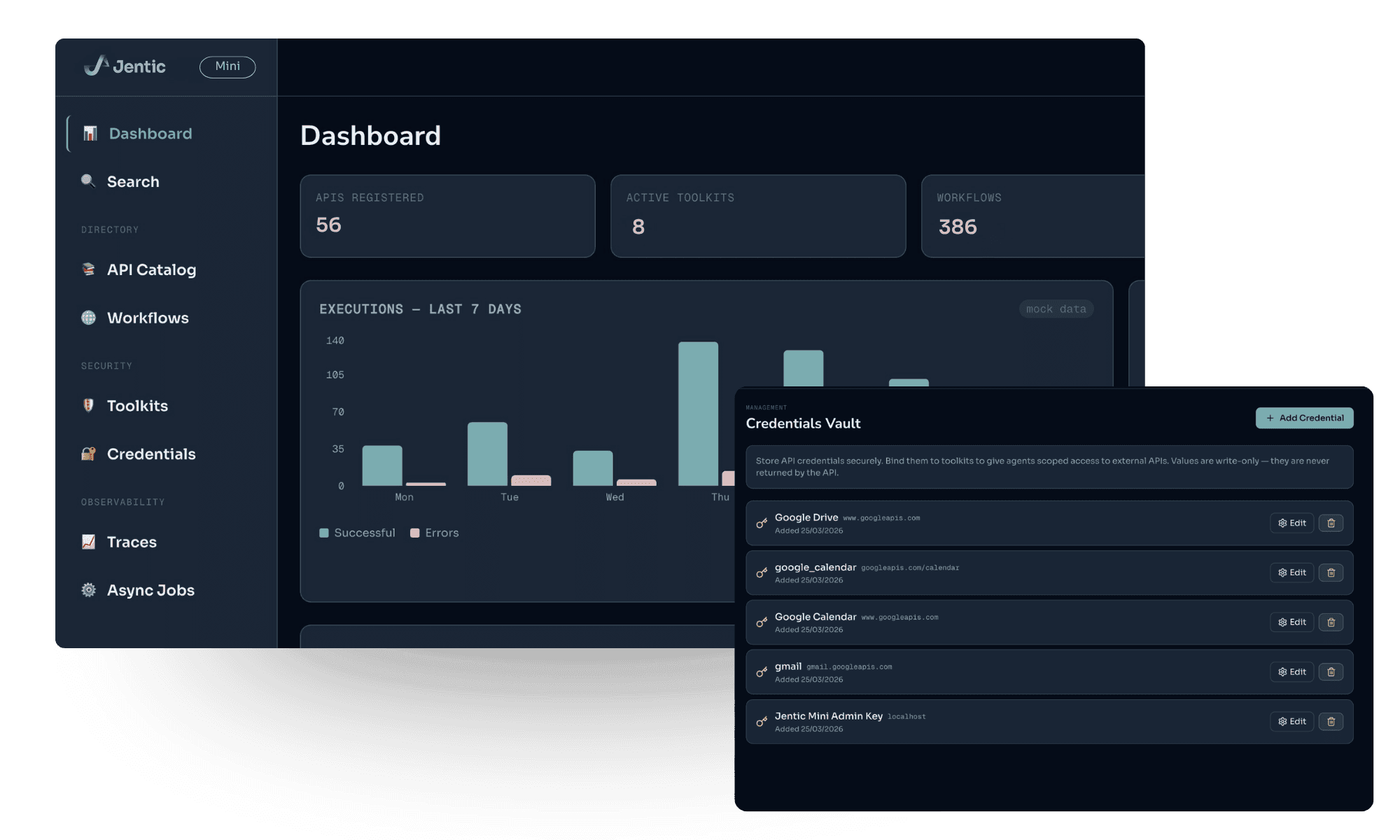
Have you asked your agent to install Jentic Mini yet?
The free, self-hosted integration layer for OpenClaw and other AI agents. Jentic Mini gives you a foundation for connecting your internal systems to AI without the friction of manual integration or proprietary lock-in.
Simply ask your agent to install the “Jentic Skill”, and from there your agent can setup Jentic Mini for you.
— An Update from Erik

Erik Wilde
Head of Enterprise Strategy
Hands-On Masterclass: Designing AI-Ready APIs (Live with Packt, May 23)
Frank and I are delivering a half-day live masterclass on May 23, organised by Packt (one of the best-known technical publishing houses in the industry). The session is called “Designing AI-Ready API Platforms”, and it’s a hands-on deep dive into what it actually takes to make your API ecosystem work safely with AI agents. We cover everything from improving OpenAPI specifications and applying governance with Overlays, to modelling deterministic multi-API workflows with Arazzo. All through guided exercises, not just slides. The core idea is the same one we keep coming back to: you don’t need to tear down your existing API landscape. Every step we walk through adds a layer of AI-readiness incrementally, so teams can move at their own pace without a big-bang redesign.
Seats are limited, and this is a live interactive session, not a recording. If this is relevant to your work, now is the time to sign up. Use code EARLY40 for 20% off with our early bird discount.
Heading to apidays New York: Finding the Common Ground in Agents
apidays New York (May 13–14, 2026) is the next stop for the OpenAPI Initiative Track, and this edition is shaping up to be one of the strongest yet. Six speakers will take the OAI Track stage, including Frank, API Evangelist Kin Lane, and other high-profile voices in the API community covering OpenAPI, Arazzo, Overlays, and the intersection of APIs and AI. I’ll also be speaking outside the OAI Track, presenting “The Hidden Common Ground in Business Agents and Agentic Coding”. Many organizations treat these as separate trends and end up duplicating investment, fragmenting governance, and misaligning their API and AI strategies. The talk walks through the architectural, governance, and capability requirements of each (independently first, then side-by-side) to surface a shared platform substrate that is usually overlooked. The result is a more coherent roadmap: align API, AI, and governance investments around one unified capability foundation rather than solving the same problem twice.
— An Update from Frank

Frank Kilcommins
Head of Enterprise Architecture
Arazzo Editor: Build, Edit, and Export API Workflows
Authoring Arazzo workflows by hand means wrestling with YAML structure, runtime expressions, and step dependencies simultaneously. The Arazzo Editor removes that friction. Build workflows through structured forms: add steps, configure parameters, define success criteria, set up failure handling. See the diagram update in real time. Export clean, valid YAML when you’re done. Agents will increasingly author these workflows autonomously. But humans still need to review, approve, and understand what’s being executed before it runs in production. The editor makes that oversight practical.
Best Practices for Building Agentic Systems
Agentic systems aren’t just automation with an LLM bolted on. They require a fundamentally different architecture, one designed for autonomy rather than just task execution. My perspectives in an InfoWorld feature alongside other industry experts cover what it actually takes to get this right. The key insight: determine what behaviour is adaptive versus deterministic, and codify the latter. Not everything needs an LLM in the loop. The teams shipping reliable agents in production are the ones drawing that line deliberately.
API AI Readiness Framework: Now Open Source
Valid APIs and AI-ready APIs are not the same thing. An API can pass every linter check and still fail silently when consumed by an agent. Jentic has open-sourced its API AI Readiness Framework, bringing full transparency to the methodology behind the Scorecard. It evaluates APIs across six dimensions: foundational compliance, developer experience, AI readiness, AI usability, security, and AI discoverability. Each surface concrete, actionable signals.
— Webinar Series
Hosted by Frank & Erik
Register for the latest webinars on APIs, agents, and what it takes to move from pilot to production.
OpenClaw & Universal Agents
Discover why APIs built for humans struggle with AI consumers. Learn how to assess your API estate for AI-readiness. Explore the six critical dimensions to future-proof your APIs for the agentic era.
Watch Recording →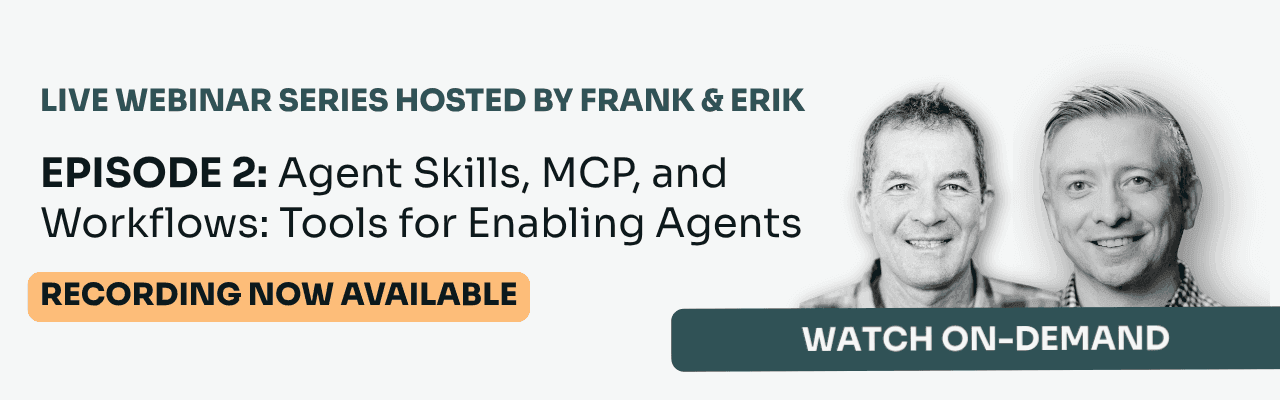
Agent Skills, MCP & Workflows
As agents take on broader responsibilities, learn the three complementary approaches: Skills, MCP, and Workflows. Discover what separates production-ready agents from one-off experiments.
Watch Recording →